Seven Table Games to Try When the Reels Feel Stale
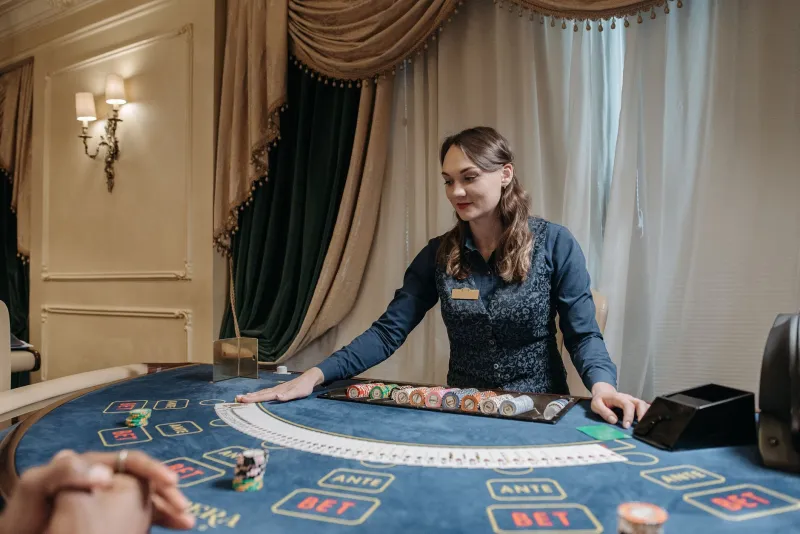
There is a point in many slot sessions where the spin button starts doing all the thinking. You are not really watching the reels any more. You are just tapping, waiting and hoping. That is not a catastrophe, but it is a sign that the format might have gone stale.
Switching to a table game will not magically make gambling a sensible financial plan. It will not turn a losing session into a winning one. What it can do is slow you down, give you decisions to make and make the time feel more deliberate. For UK players who want entertainment with a bit more texture, here are seven table games worth a proper look.
Why Swap the Reels for a Table?
Slots are built for speed. That is part of the appeal, but speed can also make a budget disappear in a blur. Table games tend to have more structure: a deal, a decision, a result. Some are quick, some are slow, and the skill factor varies wildly. The point is not to chase better odds as if you can beat the house. The point is to find a format that keeps you engaged and conscious of what you are staking.
All seven below are available at many UK-licensed online casinos. House edges are approximate and can shift with rules, variants and strategy, so treat the numbers as a rough guide rather than a promise.
1. Blackjack: The Pace-Setter
Blackjack is the obvious first stop for anyone who wants decisions without a steep learning curve. You are trying to get closer to 21 than the dealer without going bust, and the basic choices are hit, stand, double or split. The pace is brisk but not frantic, and the skill element is real. A player using basic strategy can reduce the house edge to roughly 0.5% on a good rule set, though poor rule sets and casual decisions can push it higher.
For UK players, blackjack is a good reset because it forces you to look at the cards rather than tap a button on autopilot. It also makes staking feel more visible. You are choosing each bet, not firing off 40 spins while the kettle boils.
2. European Roulette: Simple, But Not Soft
Roulette is the easiest table game to understand: pick a number, colour or group of numbers, then watch the ball. European roulette has one zero, which gives it a house edge of around 2.7%. That is not a small number, and it is worth saying clearly. Roulette is simple, but simple does not mean generous.
What roulette offers is a different rhythm. The betting phase, the spin and the result create natural pauses. If you are used to slots, those pauses can be useful. They give you a moment to check your budget and decide whether the next bet is still part of the plan.
3. Baccarat: Fewer Calls, Quick Rounds
Baccarat looks posh, but the online version is one of the least demanding table games around. You usually choose Player, Banker or Tie, and the closest hand to nine wins. Banker carries a house edge of roughly 1.06%, Player is around 1.24%, and the Tie bet is much riskier at around 14.4%.
Baccarat is quick, so it can still eat a budget if you are not careful. But the decision is simple and the rounds have a clear beginning and end. For someone who wants a break from reels without a complicated rulebook, it is a sensible option.
4. Casino Hold'em: Poker Flavour Without the Table Talk
Casino Hold'em gives you a taste of poker without needing to read opponents or manage a full table. You play against the dealer, make an ante bet, see your cards and decide whether to call. There is a community-card reveal, which adds a bit of drama, and the house edge is often around 2% with the right strategy.
It is not a soft game, but it is an engaging one. The call-or-fold decision is a genuine choice, and that small moment of judgement can make a session feel more active than a run of slot spins.
5. Three Card Poker: Quick Decisions, Clear Odds
Three Card Poker is a neat middle ground between speed and involvement. You get three cards, the dealer gets three cards, and you decide whether to play or fold. There are also side bets, but those usually carry a higher house edge, so they are best treated as optional extras rather than the main event.
The main game has a house edge that varies with the pay table, often somewhere in the 2% to 3.5% range. It is fast enough to keep things lively but structured enough to stop you drifting into a trance.
6. Pontoon: A UK Blackjack Cousin
Pontoon is a British variant of blackjack, and it has its own quirks: a five-card trick can win automatically, and the dealer's peeking rules are different from standard blackjack. It is familiar enough to pick up quickly but different enough to feel fresh.
The house edge depends heavily on the specific rules and how well you play, often landing somewhere around 0.5% to 1.5% with solid basic strategy. If you already know blackjack, Pontoon is a good way to make the format feel new without starting from scratch.
7. Pai Gow Poker: Slow, Sociable and Unhurried
Pai Gow Poker is the relaxed end of the table-game spectrum. You get seven cards and split them into a five-card hand and a two-card hand, trying to beat the dealer on both. Ties often go to the dealer, and the house edge is usually around 1.5% to 2.5% depending on rules and strategy.
What makes Pai Gow useful is the pace. It is slower than most alternatives, and that can be a feature rather than a bug. If you want to spend 30 minutes making deliberate choices instead of 30 minutes tapping spin, it is a welcome change of scenery.
Keeping It Entertainment-First
Trying a table game does not change the basic rules of sensible play. Set a budget before you start. Decide how long you want to play. Take breaks. Do not chase losses. Do not increase stakes because you feel like you are due a change of luck.
And remember that switching formats is not a cure for a bad session. If you are playing to win back money, a table game will not fix that. If you are playing for entertainment, a change of pace can genuinely help. It gives you something to think about, a reason to pay attention and a natural stopping point when the session has run its course.
The reels will still be there tomorrow. Sometimes the smarter move is to leave them alone for a while and see what else the table has to offer.